Bohol is the next big island south of Cebu. The island-province is a center for adventurous tourists, with dramatic scenery, beautiful beaches, and virgin rain-forests. The provincial capital and largest city is Tagbilaran on the southwest tip of the main island. Separated by a narrow channel from Tagbilaran is the much smaller island of Panglao, where the province's only commercial airport is located, along with it's most popular beach destination.
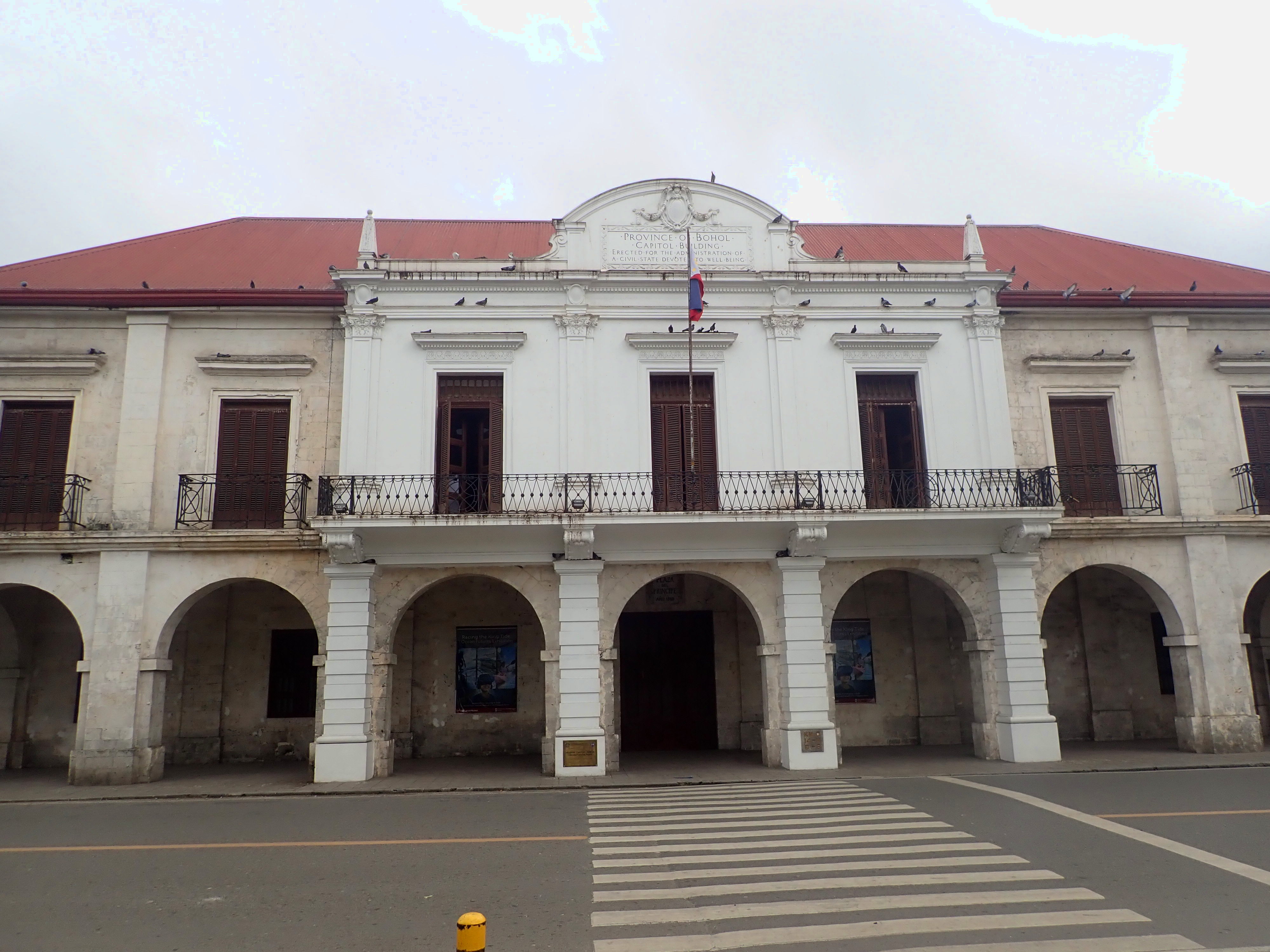
The former Bohol Provincial Hall, now a branch of the National Museum
Getting There and Getting Around
Bohol is easily reached by sea or by air. Bohol Panglao airport is located on Panglao island, just off the southwest tip of the main island. Flights to Bohol are available from Manila, Davao and El Nido. At last check, the only international flights were from South Korea. Ferries connect several cities on Bohol to other islands in the archipelago.
The main ferry route is from Cebu with some routes continuing on to Siquijor Island and Dumaguete.
Panglao Island is the main tourist destination for Bohol Province. There are hotels and resorts spread out all around the island's coastline, but the main concentration is in the Alona Beach area. There are many places right on the beach, or within a five minute walk of it. In addition, there are many shops and restuarants to choose from, plus, one of the highest concentrations of scuba dive shops I think I've ever seen in such a small place.
In the central part of Bohol island is a distinctive geologic formation that many claim is one of the natural wonders of the world. From a flat plain, more than a thousand conical or dome-shaped hills rise up 30 to 50 meters from the ground. Many of them are covered in a grass that turns dark brown in the dry season, hence the common name for the feature.
The hills have their origin in the geology of the region.
Early in the eighteenth century, the Jesuits built a dozen or so churches around Bohol. The churches were all built of coral stone on essentially the same plan. The variations came in the interior decorations, as well as the additions made over the years. Most of them still exist and are considered important national monuments. Many of the buildings were damanged by an earthquake in 2013 but have been restored to their former glory.
The Loboc River flows down from the central mountains of Bohol, through the town of Loboc, before reaching the sea at Loay, about 18 kilometers east from Tagbilaran. River cruises up-river from Loboc town are a popular tourist activity often included in day trips to other sights such as the Chocolate Hills. The boats used are twin-hulled barges pushed by a small tug and they generally serve a buffet meal offering local dishes.
On the way to or from the Chocolate Hills, chances are you'll find yourself driving through a thick forest of tall trees. Many of the tour vans make a stop there after visiting the hills. The soaring trees, are very impressive. The forest was planted more than 50 years ago to restore land that had been that had been cleared by slash-and-burn for farming. However, if you listen carefully, you'll notice something: complete silence.
Tagbilaran is located on the southwestern tip of Bohol island. It was an already-established trading port when the Spanish arrived in the sixteenth century, although there isn't really anything that pre-dates the European colonists, who didn't establish their own settlement here until the eighteenth century.
The former Bohol Provincial Hall, now a branch of the National Museum Although it is the most populous city in Bohol province, the provincial capital is not very big.